
 English
 Français
Many children have stuffed animals, but few have continued to collect them like Jackie Miley, a 68-year-old American...

0123-456-789
10% OFF on your first order ! Promocode : 10First
Search in blog
Latest posts
-
 THE WORLD'S LARGEST TEDDY BEAR COLLECTIONRead more
 -
 THE LION, KING OF THE SAVANNAH: DESCRIPTION, HABITAT, FOOD AND REP...Read more
Did you know that despite their reputation as hunters, Lionesses are not often successful in their hunts ? So...
-
 THE HORSE: A WILD AND DOMESTIC ANIMAL!Read more
Discover everything there is to know about the Horse ? . A mammal that has helped Man a lot, a lot in his conquests...
-
 5 EFFECTIVE METHODS TO CLEAN STUFFED TOYSRead more
Discover the best method to keep your child's stuffed animal clean and soft ? despite their adventures which often...
-
 ALL THE SECRETS THAT MAKE PENGUINS SO SURPRISING!Read more
This is the story of a penguin ? who breathes through his buttocks . One day, suddenly, he sat down And poof, he's dead.
-
 HOW TO CHOOSE THE PERFECT PLUSH TOY FOR YOUR CHILD?Read more
It is often difficult to know which soft toy to buy to make your child happy. So discover all the secrets to finding...
-
 SECRETS OF ADULTS WHO STILL SLEEP WITH THEIR PLUSH COMPANIONS...Read more
Many adults still enjoy their stuffed animal to fall asleep and feel calm, peaceful ? and happy! Discover all their...
-
 THE OCTOPUS, AN ACE OF CAMOUFLAGE AND INTELLIGENCERead more
You see that person who is good at everything? The Octopus ? is both an Ocean Genius, knows how to Blend into the...
-
 HOW TO CHOOSE A SAFE STUFFED ANIMAL FOR YOUR BABY?Read more
Stuffed animals are made of many materials that could be dangerous to the health of your baby or child. Check out and...
-
 THE SHARK: DIET, BEHAVIOR, REPRODUCTIONRead more
The Shark, an amazing marine animal with a fierce reputation and fascinating biology! In this article, discover 11...
Blog categories
- Default category (11)
- Have A Plush Toy (16)
- baby (3)
- Hot water bottle (2)
- White Noise (1)
- Birth Gift (5)
- Cat (1)
- Horse (1)
- Choosing A Plush Toy (4)
- Pig (1)
- DWARF PIG (1)
- Elephant (1)
- Interview (2)
- Make A Stuffed Animal (1)
- Giraffe (1)
- History Of The Teddy Bear (3)
- Gift Ideas (6)
- Olympic Games (1)
- Video Games (1)
- Jungle (1)
- Rabbit (2)
- Unicorn (1)
- Lion (1)
- Wolf (2)
- Sheep (1)
- Giant Teddy Bear (3)
- Bear (2)
- Easter (1)
- Lazy (2)
- Hot water bottle plush (2)
- Giant Plush Toy (3)
- Kawaii Plush Toy (1)
- Unicorn plush toy (1)
- Octopus (2)
- Penguin (2)
- Pokemon (1)
- Chicken (1)
- Animal Record (2)
- Record Plush (3)
- Shark (2)
- Tendency (4)
- Tiger (2)
- Xxl (3)
THE WOLF: PLACE OF LIFE, DIET, PACK BEHAVIOR AND ITS ORIGINS...
Summary
1) The Grey Wolf in 10 Seconds TOP CHRONO2) Physical Description of the Wolf3) Where do Wolves live in the World?• A- Its Habitat of the past• B- The Current Habitat of this Wild Canid 4) The Wolf's Diet• A- What are its preys?• B- The Wolf and the Cattle5) Wolf Predators and Longevity6) Canis Lupus Behavior • A- Behavior and Organization of the Pack• B- The Territories of the Packs • C- Communication and Howling7) Some Surprising Facts about the Wolf8) Reproduction and Offspring of the Gray Wolf• A- The Birth of the Baby Wolf• B- The Cubs9) The Anatomy of the Wolf10) Other Species of Wolves• A- The Red Wolf• B- The Wolf of the East• C- The Ethiopian Wolf• D- Falkland Islands and Antarctic Wolf• E- Dire Wolf• F- Still Other Species11) Wolf Population and Conservation• A- Population• B- Level of Legal Protection of the Gray Wolf• C- Conservation Status of the Wolf12) Wolves and Humans• A- A Negative Image of the Wolf• B- The Extinction of WolvesWith their piercing gazes and breathtaking howls, wolves inspire both adoration and controversy around the world. The gray wolf (Canis lupus) is the most well-known of them all , but did you know that they are also the most widespread large land mammal on the planet after humans and livestock? So find out how many species of wolves there are, their characteristics, how the wolf population in the continental United States nearly became extinct, and many more surprising and interesting facts about wolves.

1) The Grey Wolf in 10 Seconds TOP CHRONO
- COMMON NAME: Gray wolf, timber wolf, wolf
- SCIENTIFIC NAME: Canis lupus
- BASIC GROUP OF ANIMALS: Mammals
- DIET: Carnivore?
- SIZE: 90 cm to 1m60 in length (head and body); 30 to 50 cm in tail length and about 76 cm at the shoulder
- WEIGHT: 18 to 80 kg
- LIFESPAN: 8 to 13 years (6 to 8 years in the wild)
- HABITAT: Varied forests of Europe, North America (Alaska, northern Michigan, northern Wisconsin, western Montana, northern Idaho, northeastern Oregon and the Yellowstone region of Wyoming) and Asia
- POPULATION: 17,000 in the United States
- CONSERVATION STATUS: Least Concern

2) Physical Description of the Wolf
The wolf, one of two species of wild dog-like carnivores?. It is the largest member of the Canidae (dog) family. The gray wolf looks a lot like a large German shepherd dog, with pointed ears and a long, bushy, black-tipped tail.
Wolf coat colors range from white to gray and brown to black; most have a mixture of colors with tawny facial markings and underparts. Northern wolves are often larger than southern wolves, and males are generally larger than females.

3) Where do Wolves live in the World?
A- Its Former Habitat
With the exception of man and the lion, the gray wolf once had a wider distribution than any other land mammal, extending across North America, from Alaska and Arctic Canada south to central Mexico, and across Europe and Asia above 20° north latitude.
It lived in all types of habitat except tropical forests and the driest deserts, and was the primary hunter of large hoofed mammals . Several subspecies occur in North America, Eurasia, and Africa; however, classifications disagree on the number of wolf subspecies.

B- The Current Habitat of this Wild Canid
At one time or another, the gray wolf has traversed almost every type of environment north of the equator, from deserts to tundra, but it has been hunted to near extinction wherever it has been found. Today, it still inhabits large areas of the Northern Hemisphere (North America, Europe, and Asia). The Ethiopian wolf , (Abyssinian wolf, C. simensis) inhabits the highlands of Ethiopia; until recently, it was considered a jackal.
In ecosystems where they occur, wolves are a keystone species : They have a great influence on their environment despite their low abundance. Gray wolves exert control over their prey, altering the numbers and behavior of large herbivores – such as deer (which are now overabundant in many places), which eventually affects even the vegetation. Because of this important role, wolves occupy a central place in rewilding projects.

The gray wolf is an extremely adaptable species and is one of the animal species that survived the last ice age. The gray wolf's physical characteristics allowed it to quickly adapt to the harsh conditions of the ice age, and its cunning and adaptation helped it survive in a changing environment.
4) The Wolf's Diet
A- What are his preys?
Wolves move and hunt primarily at night. They typically prey on large ungulate herbivores (hoofed mammals) such as deer , elk , moose , bison , bighorn sheep , caribou , and muskoxen , which they chase, seize, and drag to the ground.

The gray wolf also feeds on small mammals such as hares and beavers . Wolves in western Canada will even consume and fish Pacific salmon or birds , lizards , snakes and fruit . Wolves are also scavengers and will eat the flesh of animals killed by other predators, motor vehicles...
A large percentage of the animals killed by wolves are young, old, or in poor condition. After killing an animal, the pack gorges itself (consuming about 3-9 kg per animal?) and lingers, often reducing the carcass to hair and a few bones before moving on in search of another meal. When wolves find plenty of food or hunt successfully, they eat their fill. A single wolf can consume up to 10 kg of meat at one time.
To find out even more about what he eats, you can read this article which explains in detail the wolf's diet .

B- The Wolf and the Cattle
Wolves may kill livestock and dogs when given the opportunity, but many wolves that live near livestock rarely, if ever, kill them. The number of livestock killed in North America is low, but it is increasing as wolves expand their range.
For example, during the 1990s, average annual wolf losses in Minnesota ( USA ) were 72 cattle, 33 sheep?, and 648 turkeys, plus a few other livestock. Livestock losses are higher in Eurasia. In some areas, wolves survive only by killing livestock and eating livestock carrion and human waste. Nevertheless, wolves generally avoid contact with humans.

5) Wolf Predators and Longevity
Wolves have few natural enemies other than humans ?♂️ . They can live up to 13 years in the wild, but most die well before that age. Diseases and parasites that can affect wolves include canine parvovirus, canine distemper, rabies, blastomycosis, Lyme disease, lice, mange, and heartworm.
In most parts of the world, humans are the primary cause of wolf mortality . In areas where wolf densities are high and prey populations are declining, the primary causes of mortality are killing by other wolves and starvation.

6) Canis Lupus Behavior
A- Behavior and Organization of the Pack
The gray wolf is a social animal that is known for its extensive travels. They typically live and hunt at night and in packs of two dozen individuals, but packs of 6 to 10 members are most common. They are known to often travel long distances, up to 20 km ?♀️ or more in a single day. These social animals cooperate to hunt their preferred prey such as large animals such as deer, elk, and moose.
Each individual has its own personality. The ability of wolves to form strong social bonds with each other is what makes the wolf pack possible. A dominance hierarchy is established within the pack, which helps maintain order. The strict hierarchy that wolves in the pack follow consists of a dominant male and female at the top.

The Alpha pair? continually impose themselves on their subordinates and guide the activities of the group. The female predominates in roles such as caring for and defending the young, while the male predominates in foraging and the movements associated with these activities. Both sexes are very active in attacking and killing prey, but during the summer, hunts are often conducted alone.
Usually, the Alpha male and female are usually the only two wolves in the pack that breed . All adult wolves in the pack help care for the pups by bringing them food, giving them instructions, and protecting them.

B- The Territories of the Packs
A pack's territory can extend from 80 to 3,000 square kilometers , depending on the abundance of prey, and is vigorously defended against neighboring packs. Wolves communicate with each other through visual signals (facial expression, body position, tail position), vocalizations, and scent markings.
Howling helps the pack stay in touch and also appears to strengthen social bonds between pack members. In addition to howling, marking territory with urine and feces lets neighboring packs know not to intrude. Intruders are often killed by resident packs, but in some circumstances they are accepted.
C- Communication and Howling
Gray wolves have a complex communication system that includes a wide range of barks, whines, growls, and howls. Their breathtaking howl that is legendary and iconic is one of the ways gray wolves communicate.
A lone wolf may howl to attract the attention of its pack, while wolves in the same pack may howl together to establish their territory and declare it to other wolf packs. Howls can also be confrontational or much like domestic dogs ?? barking, wolves may simply begin howling in response to the howls of other wolves nearby.

7) Some Surprising Facts about the Wolf
- Wolves are thought to have been first tamed in East Asia around 15,000 years ago.
- Can wolves go more than a week without eating ?
- A wolf pack consists of two or more wolves that have a defined territory .
- Wolves were domesticated several thousand years ago, and selective breeding produced dogs ?
- In Canada, beach wolves swim between islands , eating crabs, clams and other small morsels.

8) Reproduction and Offspring of the Gray Wolf
A- The Birth of the Baby Wolf
Breeding occurs between February and April and a litter of five or six pups is usually born in the spring after a gestation period of about two months. The pups are born blind - usually in a den consisting of a natural hole or burrow, often in a hillside. At birth , wolf pups weigh only about 400 grams.
A crevice in the rock, a hollow tree trunk, an overturned stump, or an abandoned beaver lodge can also serve as a den, and even a depression under the lower branches of a conifer will sometimes suffice. All members of the pack take solicitous care of the young . After being weaned from their mother's milk at six or nine weeks, they are fed on regurgitated meat.

B- The Cubs
Throughout the spring and summer, wolf pups are the center of attention as well as the geographic focal point of the pack's activities. After a few weeks, pups are usually moved from the den to an above-ground "meeting place" where they play and sleep while the adults hunt. Pups grow rapidly and are moved farther and more frequently in late summer.
In the fall, the pack begins traveling around its territory again, and the pups must keep up . By October or November, most pups are almost fully grown. After two or more years in the pack, many move on to find a mate, establish a new territory, and eventually form their own pack.

Those that remain with the pack may eventually replace a parent to become a breeding (alpha) animal. Large packs appear to result from fewer young wolves leaving the group and litters being produced by more than one female. Wolves that leave their pack have been known to travel up to 550 miles (886 km).
9) The Anatomy of the Wolf
The wolf is built to travel. Its long legs, large feet, and deep but narrow chest suit it well for life on the move. Its keen senses, large canines, powerful jaws, and ability to chase prey at 60 km/h make the wolf an ideal predator .

A typical northern male can be about 2 meters long ? , including the bushy tail half a meter long. Standing 76 cm tall at the shoulder , it weighs about 45 kg, but its weight varies from 14 to 80 kg (depending on the geographical area). Females are on average 20% smaller than males.
The largest wolves are found in west-central Canada , Alaska, and throughout northern Asia. Smaller wolves tend to be found near the southern end of their range (the Middle East, Arabia, and India). The fur of the upper body, while usually gray, can be brown, reddish, black, or whitish, while the underside and legs are usually yellow-white. Light-colored or white wolves ⚪ are common in arctic regions.

10) Other Species of Wolves
A- The Red Wolf
The red wolf is tawny, reddish? or black. It reaches a length of about 105–125 cm, not including the tail, which is 33–43 cm long, and weighs about 20–37 kg. It was once considered a separate species of wolf, but studies have determined that the red wolf is a hybrid between the gray wolf and the coyote (sometimes called a prairie, brush, or small wolf), with over 75% of the red wolf's ancestors coming from coyotes.
Some experts, however, continue to classify the red wolf as a separate species, while others classify it as a subspecies (C. lupus rufus) of the gray wolf. The red wolf is considered one of the most endangered types of wolves ⚠ . Its former range extended from the southeastern United States to Texas in the west.

After its extinction in the wild in 1980, captive-bred red wolves were reintroduced to coastal North Carolina. A small population of fewer than 100 individuals has become established, but the population is threatened by continued hybridization with coyotes .
B- The Wolf of the East
The eastern wolf, native to eastern North America, closely resembles the gray wolf , both in size and color. Long considered a subspecies of the gray wolf with the taxonomic name C. lupus lycaeon, the eastern wolf was recognized as a single wolf species (C. lycaeon) in the early 21st century. However, as with the red wolf, evidence supports the idea that eastern wolves are hybrids of gray wolves and coyotes; their ancestry has been traced through contributions made by both species in roughly equal proportions.

C- The Ethiopian Wolf
The Ethiopian wolf (C. simensis), a critically endangered species , resembles the coyote. It lives in a few isolated areas of grassland and heathland at high altitudes in Ethiopia. Although they live in packs, wolves hunt rodents and other small mammals alone.

D- Falkland Islands and Antarctica Wolf
Genetic evidence suggests that the now-extinct Falkland Islands wolf, or Antarctic wolf (Dusicyon australis) , diverged from North American wolves about six million years ago ⏳. Although the Isthmus of Panama, which allowed the canids to migrate to South America, did not form until 2.5 million years ago, D. australis somehow managed to reach the Falklands.

E- Dire Wolf
The dire wolf (C. dirus) was common in western North America during the Pleistocene epoch, but is now extinct ☠️. It was the largest known wolf, again being twice the size of the modern gray wolf .

F- Still Other Species
Other animals are also called "wolves" but not belonging to the genus Canis?, such as the maned wolf , the American wolf and the Tasmanian wolf (also called the Marsupial Wolf or Tasmanian Tiger).

11) Wolf Population and Conservation
A- Population
Wolves are the largest members of the dog family. The adaptable gray wolves are by far the most common and were once found throughout the Northern Hemisphere. They are probably more popular today than at any other time in history. In 1995, wolves from Canada were reintroduced to Yellowstone National Park and Idaho, and captive-bred Mexican wolves (a subspecies) were released into their former range in eastern Arizona beginning in 1998.

At the beginning of the 21st century, an estimated 65,000 to 78,000 wolves inhabited North America. Canada had the largest population (although the provinces of New Brunswick, Nova Scotia, and Prince Edward Island have no wolves), followed by Alaska and Minnesota. Some of the western states as well as Michigan, Wisconsin, Europe, and Asia have smaller but recovering wolf populations.
B- Level of Legal Protection of the Gray Wolf
Canadian wolves are protected only in provincial parks, while all wolves in the United States receive some level of legal protection from federal and state governments. Populations in southern Europe and Scandinavia are relatively small, but increasing. The Eurasian population probably exceeds 150,000 and is stable or increasing in most countries, most of which provide some degree of legal protection to the wolf.

Worldwide, wolves still occupy about two-thirds of their former range . Although often considered a wild animal, the wolf can and does thrive in close proximity to humans when not excessively persecuted and food is available. Few gray wolves survive in Europe, but many live in Alaska, Canada, and Asia.
C- Conservation Status of the Wolf
Gray wolves have a conservation status of least concern, meaning there is a large and stable population . Wolves were successfully reintroduced ✅ into Yellowstone National Park and parts of Idaho in 1995. They have naturally recolonized parts of their former range, moving into Washington and Oregon. In 2011, a lone male wolf traveled to California. There is now a resident pack in that area.

In the Great Lakes region, gray wolves are now thriving in Minnesota, Michigan, and now Wisconsin. One challenge with expanding gray wolf populations is that people continue to fear wolves, many farmers and ranchers view gray wolves as a threat to livestock, and hunters want the government to declare open season on gray wolves to prevent them from preying on game such as deer, elk, and moose.
By the mid-1930s, most gray wolves in the United States had been killed and reduced to a minimum. Today, the gray wolf's range in North America has been reduced to Canada and parts of Alaska, Idaho, Michigan, Minnesota, Montana, Oregon, Utah, Washington, Wisconsin, and Wyoming. The Mexican wolf, a subspecies of the gray wolf, is found in New Mexico and Arizona.

In the rest of the world, the wolf is gradually making its way into Europe and Central Asia , and is encountering the same problems as in the United States : farmers and their livestock, as well as hunters and their game.
12) Wolves and Humans
A- A Negative Image of the Wolf
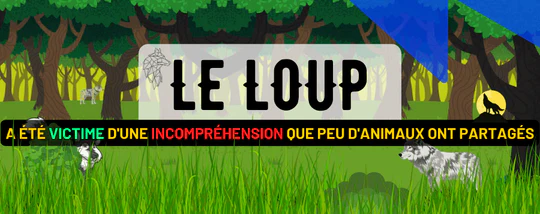
Pervasive in mythology, folklore, and language, the gray wolf has impacted the human imagination and suffered levels of misunderstanding shared by few animals. Negative feelings toward wolves have been perpetuated over the centuries by popular culture. Fairy tales such as Little Red Riding Hood portray wolves as vicious predators; these negative portrayals make it very difficult to present wolves as a species worth protecting.

Yet early human societies that hunted for survival admired the wolf and tried to emulate its habits . But wolves and humans have a long history of confrontation. Although wolves rarely attack humans, both wolves and humans are top predators in the food chain.
B- The Extinction of Wolves
Therefore, in recent centuries they have often come into conflict as habitats decline and wolves are more likely to attack livestock, and the wolf has been widely regarded as a malevolent creature , a danger to humans (especially in Eurasia), a competitor for big game animals, and a threat to livestock.

Unfortunately, livestock depredation has been the primary justification for wolf eradication in virtually all of the United States , Mexico, and most of Europe. Wolves are therefore considered one of the most fearsome natural animal villains in the world. They prey on domestic animals, and thus countless wolves have been shot, trapped, and poisoned because of this tendency.
In the lower 48 states, gray wolves were hunted to near extinction , although some populations survived and others have since been reintroduced. By the late 20th century, greater tolerance, legal protection, and other factors helped expand their range into parts of North America and Europe.

<span styl
Posted in:
Wolf
Related posts
-
 IN THE SHADOW OF THE FOREST: THE SECRET LIFE OF WOLVES
In the shadows of the forests, wolves reign supreme, their howls echoing from the wilderness. Their fascinating...Read more
IN THE SHADOW OF THE FOREST: THE SECRET LIFE OF WOLVES
In the shadows of the forests, wolves reign supreme, their howls echoing from the wilderness. Their fascinating...Read more
Featured Products

Bouillotte Peluche
Profitez des frais de port gratuit pour acheter votre bouillotte peluche. Elle sera un cadeau original pour bébé, enfant et adulte ! Faites des heureux autour de vous, fille et garçon l'adoreront !
Price: 12.500000
Leave a comment