
 English
 Français
Many children have stuffed animals, but few have continued to collect them like Jackie Miley, a 68-year-old American...

0123-456-789
10% OFF on your first order ! Promocode : 10First
Search in blog
Latest posts
-
 THE WORLD'S LARGEST TEDDY BEAR COLLECTIONRead more
 -
 THE LION, KING OF THE SAVANNAH: DESCRIPTION, HABITAT, FOOD AND REP...Read more
Did you know that despite their reputation as hunters, Lionesses are not often successful in their hunts ? So...
-
 THE HORSE: A WILD AND DOMESTIC ANIMAL!Read more
Discover everything there is to know about the Horse ? . A mammal that has helped Man a lot, a lot in his conquests...
-
 5 EFFECTIVE METHODS TO CLEAN STUFFED TOYSRead more
Discover the best method to keep your child's stuffed animal clean and soft ? despite their adventures which often...
-
 ALL THE SECRETS THAT MAKE PENGUINS SO SURPRISING!Read more
This is the story of a penguin ? who breathes through his buttocks . One day, suddenly, he sat down And poof, he's dead.
-
 HOW TO CHOOSE THE PERFECT PLUSH TOY FOR YOUR CHILD?Read more
It is often difficult to know which soft toy to buy to make your child happy. So discover all the secrets to finding...
-
 SECRETS OF ADULTS WHO STILL SLEEP WITH THEIR PLUSH COMPANIONS...Read more
Many adults still enjoy their stuffed animal to fall asleep and feel calm, peaceful ? and happy! Discover all their...
-
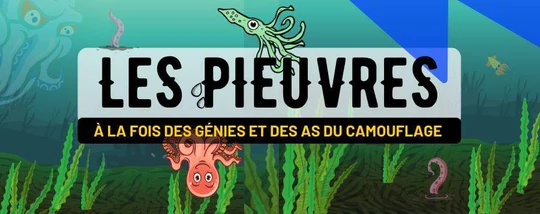 THE OCTOPUS, AN ACE OF CAMOUFLAGE AND INTELLIGENCERead more
You see that person who is good at everything? The Octopus ? is both an Ocean Genius, knows how to Blend into the...
-
 HOW TO CHOOSE A SAFE STUFFED ANIMAL FOR YOUR BABY?Read more
Stuffed animals are made of many materials that could be dangerous to the health of your baby or child. Check out and...
-
 THE SHARK: DIET, BEHAVIOR, REPRODUCTIONRead more
The Shark, an amazing marine animal with a fierce reputation and fascinating biology! In this article, discover 11...
Blog categories
- Default category (11)
- Have A Plush Toy (16)
- baby (3)
- Hot water bottle (2)
- White Noise (1)
- Birth Gift (5)
- Cat (1)
- Horse (1)
- Choosing A Plush Toy (4)
- Pig (1)
- DWARF PIG (1)
- Elephant (1)
- Interview (2)
- Make A Stuffed Animal (1)
- Giraffe (1)
- History Of The Teddy Bear (3)
- Gift Ideas (6)
- Olympic Games (1)
- Video Games (1)
- Jungle (1)
- Rabbit (2)
- Unicorn (1)
- Lion (1)
- Wolf (2)
- Sheep (1)
- Giant Teddy Bear (3)
- Bear (2)
- Easter (1)
- Lazy (2)
- Hot water bottle plush (2)
- Giant Plush Toy (3)
- Kawaii Plush Toy (1)
- Unicorn plush toy (1)
- Octopus (2)
- Penguin (2)
- Pokemon (1)
- Chicken (1)
- Animal Record (2)
- Record Plush (3)
- Shark (2)
- Tendency (4)
- Tiger (2)
- Xxl (3)
THE OCTOPUS, AN ACE OF CAMOUFLAGE AND INTELLIGENCE
Summary
1) The Octopus in 10 Seconds Top Chrono2) The Difference Between Octopus, Squid and Squid• A- The Octopus and the Octopus• B- The Octopus and the Squid3) A Camouflage Ace4) Unparalleled Intelligence5) Diet and Night Hunting6) Octopus Lairs7) Anatomy• A- The Tentacles and the Arms• B- Hearts and Blood8) Reproduction and Offspring: We must ensure the next generation!9) Behavior• A- More sophisticated than a Pagani• B- Defense Systems: Fleeing a hungry predator10) Only a few hundred species...11) An Endangered Species?12)The Common OctopusThe common octopus is said to be unique in its appearance alone , with its massive bulbous head, large eyes and eight distinctive arms. But by far the most striking feature of the octopus is the wide range of techniques it uses to avoid or outwit its attackers .
Belonging to the cephalopods (a subgroup of marine invertebrates), known for their high intelligence, uncanny ability to blend into their surroundings, unique locomotion style, and ability to squirt ink, octopuses are among the most fascinating creatures of the sea , found in every ocean around the world and in the coastal waters of every continent.

Octopuses vary greatly in size: the smallest, Octopus Arborescens, is about 5 cm long, while the largest species can reach 5.4 metres long and have an arm span of almost 9 metres. They therefore have eight contractile arms.
Each arm bears two rows of fleshy suckers that are capable of great holding power. The arms are connected at their base by a web of tissue called a skirt, in the center of which is the mouth. This latter organ has a pair of sharp, horny beaks and a file-like organ, the radula , which is used to pierce shells and grate the flesh.

1) The Octopus in 10 Seconds Top Chrono
- COMMON NAME: Octopus
- SCIENTIFIC NAME: Octopus, Tremoctopus, Enteroctopus, Eledone, Pteroctopus, and many others
- BASIC GROUP OF ANIMALS: Invertebrates
- DIET: Carnivore?
- SIZE: 3 cm - 5 m
- WEIGHT: 1 g - 280 kg
- LIFESPAN: One to three years
- HABITAT: All oceans; coastal waters of all continents
- POPULATION: There are at least 289 species of octopus; no population estimates are possible and therefore available.
2) The Difference Between Octopus, Squid and Squid
A- The Octopus and the Octopus
In popular language we tend to use the words octopus and octopus to designate the same animal, rightly or wrongly?
The general public is right to confuse these two terms, because they refer to the same cephalopod? which populates the oceans all over the world. The words octopus and octopus are synonyms!

B- The Octopus and the Squid
Things get complicated, unlike the previous case, octopus or octopus are not synonymous words with the word squid?. The octopus and the squid have a rather similar appearance, they are not the same animal . The squid or also called squid is more elongated than the octopus and has 10 tentacles compared to 8 for the octopus. This is why it belongs to the group of marine decapod cephalopods , which includes all mollusks with 10 tentacles and thus more than 300 species!

3) A Camouflage Ace
Its first and most amazing line of defense is its ability to hide in plain sight. Thanks to a network of pigment cells and specialized muscles in its skin, this invertebrate can almost instantly adapt to the colors, patterns, and even textures of its environment. Predators such as sharks, eels, and dolphins pass by without even noticing.
In more detail, its skin is covered with three types of specialized skin cells that can rapidly change color, reflectivity, and opacity, allowing this invertebrate to easily blend into its environment . "Chromatophores" are responsible for the colors red?, orange, yellow, brown, and black ⚫; "leucophores" mimic white ⚪; and "iridophores" are reflective, and therefore perfectly suited for camouflage. Thanks to this arsenal of cells, some octopuses can make themselves indistinguishable from algae.

4) Unparalleled Intelligence
It’s one of the weirdest creatures on Earth, and not just because it looks so different. The octopus can camouflage itself in the blink of an eye, fit its entire body through a thumb-sized hole, and… what about its brain? An octopus has a large central brain and eight mini-brains , one in each arm! As author and naturalist Sy Montgomery , who believes their intelligence is almost off the charts, says, “Octopuses are so brilliant.”
Octopuses are the only marine animals, other than whales and pinnipeds , that exhibit primitive problem-solving and pattern-recognition skills . But whatever kind of intelligence these cephalopods possess, it is different from that of humans??, probably closer to a cat.

Two-thirds of an octopus's neurons are located along the length of its arms , rather than its brain, and there is no convincing evidence that these invertebrates are capable of communicating with others of their species. It is not for nothing that many science fiction works (such as the book and film "Arrival") feature aliens loosely modeled on octopuses.
The veined octopus (Amphioctopus marginatus) is also known for its intelligence. In 2009, biologists reported observing the animals hollowing out coconut shell halves — from the ocean floor — and carrying them around to use as portable shelters . Such behavior is considered by biologists to be the first documented example of tool use by an invertebrate.

5) Diet and Night Hunting
Octopuses are carnivorous, and adults feed primarily on small fish , crabs , clams, snails , and other octopuses , although some feed on plankton . They usually feed alone and at night, pouncing on their prey and wrapping it in webbing between their arms. Some octopuses use a more or less toxic venom that they inject into their prey with a bird-like beak; they can also use their beaks to penetrate and crack hard shells. They sometimes use their ink to disorient their victims before attacking them.
6) Octopus Lairs
Octopuses are nocturnal hunters, and they spend part of their daytime ☀ in dens, usually holes in shell beds or other substrate, vertical shafts sometimes with multiple openings. If the seabed is stable enough to allow it, they can reach a depth of about 40 cm . Octopus dens are made by a single octopus, but they can be reused by subsequent generations and some species are co-occupied by the male and female for a few hours.
In the laboratory, octopuses build dens from shells (Nautilus, Strombus, barnacles), or artificial terracotta flower pots, glass bottles?, PVC pipes, custom blown glass. They therefore have the ability to adapt with whatever is available .
Some species have colonies, grouped together in a den. For example, the gloomy octopus (Octopus Tetricus) lives in groups of about 15 animals , in situations where there is plenty of food, many predators? and little opportunity for dens. The gloomy octopus den groups are dug in shell cavities, a pile of shells built by the octopuses from their prey.

7) Anatomy
A- The Tentacles and the Arms
The octopus is essentially a mollusk without a shell but with eight arms and three hearts. When it comes to cephalopods, marine biologists are careful to distinguish between "arms" and "tentacles ." If the invertebrate structure has suckers along its entire length, it is called an arm; if it only has suckers at its tip, it is called a tentacle. By this standard, most octopuses have eight arms and no tentacles, while two other cephalopods, cuttlefish and squid, have eight arms and two tentacles.
B- Hearts and Blood
All vertebrate animals have a heart, but the octopus has three : one that pumps blood throughout the cephalopod's body (including the arms), and two that pump blood into the gills, the organs that allow the octopus to breathe underwater — by collecting oxygen. And there's another key difference: The main component of octopus blood is hemocyanin, which contains copper atoms, rather than hemoglobin, which contains iron atoms. This is why octopus blood is blue rather than red.

8) Reproduction and Offspring: We must ensure the next generation!
Octopuses have a very short life, between one and three years, and they are dedicated to raising the next generation. Mating occurs when the male approaches the female. The male has a specially modified arm, usually the third right arm, with a special spike called a hectocotylus that he uses to transfer sperm to the female's oviduct through spermatophores (sperm packets). He can fertilize multiple females, and females can be fertilized by more than one male.
The male dies shortly after mating. Most octopuses mate during the winter and the female searches for a suitable spawning site and reproduces a few weeks later. Laying the eggs ? (about 0.3 cm long) in festoons , chains that are attached to rock or coral or to the walls of the den. Depending on the species, the total number of eggs can be as high as over 100,000 . During the four to eight weeks it takes for the larvae to hatch, the female watches over and cares for them, airing them, cleaning them with her suckers and agitating them with water. A few days after hatching, the mother octopus also dies.

Some benthic (octopus species that live in the benthos ) and littoral species produce a smaller number of larger eggs that house a more developed larva. Upon hatching, the tiny octopuses, which look very similar to their parents, begin life as planktonic squid , spending several weeks drifting in clouds of plankton. If not eaten by a passing whale, the octopus larvae feed on copepods , larval crabs, and marine seal larvae, until they are developed enough to seek refuge on the ocean floor.
9) Behavior
A- More sophisticated than a Pagani
Much like an underwater sports car, the octopus has three gears . If it's not in a particular hurry, this cephalopod will lazily walk along the ocean floor using its arms and suction cups. If it's feeling a bit more rushed, it will actively swim by flexing its arms and body.

And if he's really in a hurry (say, because he's just been spotted by a hungry shark), he'll take water into his mantle and expel a jet of water from his body cavity and swim away as fast as he can, often squirting a disorienting drop of ink at the same time.
B- Defense Systems: Fleeing a Hungry Predator
When threatened by predators, most octopuses release a thick cloud of black ink , composed primarily of melanin (the same pigment that gives humans their skin and hair color) to obscure the attacker's vision, giving it time to swim away.

This cloud is not only a visual "smokescreen" that allows the octopus to escape unnoticed. It also interferes with predators' sense of smell , making the fleeing octopus harder to track. Sharks, which can sniff out small droplets of blood from hundreds of meters away, are particularly vulnerable to this type of olfactory attack.
In addition to ink, octopuses can squeeze their soft bodies into incredibly small cracks and crevices where predators can't follow them. The octopus can squeeze into any hole ⭕ as long as it's no smaller than its beak, the only hard part of its body.

If all else fails, she can lose an arm to escape a predator's grasp and regrow it later without permanent damage. She also possesses beak-like jaws that can deliver a vicious bite, and venomous saliva, used primarily to subdue prey.
10) Only a few hundred species...
Nearly 300 different species of octopus have been identified to date, with more being identified every year. The largest octopus identified is the giant Pacific octopus (Enteroctopus dofleini), whose fully grown adults weigh about 50 kg and have long, trailing arms up to 4.3 m long and a total body length of about 5 m.

However, there is compelling evidence of larger-than-usual giant Pacific octopuses , including one specimen that may have weighed up to 275 kg. The smallest (so far) is the pygmy star-sucking octopus (Octopus wolfi), which measures less than 3 cm and weighs less than a gram.
Most species are on average the size of the common octopus (Octopus vulgaris), which reaches between 30 and 90 cm and weighs between 3 and 10 kg.

11) An Endangered Species?
None of the octopuses are considered threatened ✅ by the International Union for Conservation of Nature (IUCN) or the online environmental conservation system ECOS . IUCN has not listed any of the octopuses.
12)The Common Octopus
The best-known octopus is the common octopus, a medium-sized animal that is widely distributed in tropical and temperate seas around the world . It lives in holes or crevices along rocky bottoms ? and is secretive and withdrawn by nature. It can reach a length of 1.5 m and a weight of 15 kg, although averages are much lower. It feeds mainly on crabs and other crustaceans.

This species is believed to be the most intelligent of all invertebrate animals. This octopus has highly developed pigment cells and can change skin color to an astonishing degree and with great rapidity. Each pigment cell (chromatophore) is individually innervated from the brain.

Posted in:
Octopus
Related posts
-
 WHAT ARE THE BENEFITS OF OCTOPUS STUFFED ANIMALS?
The octopus plush toy is now considered a real therapeutic "remedy" , notably used by the largest hospitals in Europe...Read more
WHAT ARE THE BENEFITS OF OCTOPUS STUFFED ANIMALS?
The octopus plush toy is now considered a real therapeutic "remedy" , notably used by the largest hospitals in Europe...Read more
Featured Products

Bouillotte Peluche
Profitez des frais de port gratuit pour acheter votre bouillotte peluche. Elle sera un cadeau original pour bébé, enfant et adulte ! Faites des heureux autour de vous, fille et garçon l'adoreront !
Price: 12.500000
Leave a comment