
 English
 Français
Many children have stuffed animals, but few have continued to collect them like Jackie Miley, a 68-year-old American...

0123-456-789
10% OFF on your first order ! Promocode : 10First
Search in blog
Latest posts
-
 THE WORLD'S LARGEST TEDDY BEAR COLLECTIONRead more
 -
 THE LION, KING OF THE SAVANNAH: DESCRIPTION, HABITAT, FOOD AND REP...Read more
Did you know that despite their reputation as hunters, Lionesses are not often successful in their hunts ? So...
-
 THE HORSE: A WILD AND DOMESTIC ANIMAL!Read more
Discover everything there is to know about the Horse ? . A mammal that has helped Man a lot, a lot in his conquests...
-
 5 EFFECTIVE METHODS TO CLEAN STUFFED TOYSRead more
Discover the best method to keep your child's stuffed animal clean and soft ? despite their adventures which often...
-
 ALL THE SECRETS THAT MAKE PENGUINS SO SURPRISING!Read more
This is the story of a penguin ? who breathes through his buttocks . One day, suddenly, he sat down And poof, he's dead.
-
 HOW TO CHOOSE THE PERFECT PLUSH TOY FOR YOUR CHILD?Read more
It is often difficult to know which soft toy to buy to make your child happy. So discover all the secrets to finding...
-
 SECRETS OF ADULTS WHO STILL SLEEP WITH THEIR PLUSH COMPANIONS...Read more
Many adults still enjoy their stuffed animal to fall asleep and feel calm, peaceful ? and happy! Discover all their...
-
 THE OCTOPUS, AN ACE OF CAMOUFLAGE AND INTELLIGENCERead more
You see that person who is good at everything? The Octopus ? is both an Ocean Genius, knows how to Blend into the...
-
 HOW TO CHOOSE A SAFE STUFFED ANIMAL FOR YOUR BABY?Read more
Stuffed animals are made of many materials that could be dangerous to the health of your baby or child. Check out and...
-
 THE SHARK: DIET, BEHAVIOR, REPRODUCTIONRead more
The Shark, an amazing marine animal with a fierce reputation and fascinating biology! In this article, discover 11...
Blog categories
- Default category (11)
- Have A Plush Toy (16)
- baby (3)
- Hot water bottle (2)
- White Noise (1)
- Birth Gift (5)
- Cat (1)
- Horse (1)
- Choosing A Plush Toy (4)
- Pig (1)
- DWARF PIG (1)
- Elephant (1)
- Interview (2)
- Make A Stuffed Animal (1)
- Giraffe (1)
- History Of The Teddy Bear (3)
- Gift Ideas (6)
- Olympic Games (1)
- Video Games (1)
- Jungle (1)
- Rabbit (2)
- Unicorn (1)
- Lion (1)
- Wolf (2)
- Sheep (1)
- Giant Teddy Bear (3)
- Bear (2)
- Easter (1)
- Lazy (2)
- Hot water bottle plush (2)
- Giant Plush Toy (3)
- Kawaii Plush Toy (1)
- Unicorn plush toy (1)
- Octopus (2)
- Penguin (2)
- Pokemon (1)
- Chicken (1)
- Animal Record (2)
- Record Plush (3)
- Shark (2)
- Tendency (4)
- Tiger (2)
- Xxl (3)
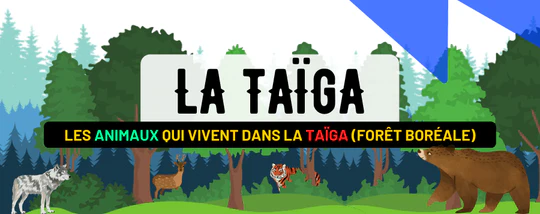
ANIMALS OF THE TAIGA: 20 ANIMALS THAT FACE THE COLD OF THE...
Summary
1) The Bear2) The Lynx3) The Marten4) The Otter5) The Beavers6) The Raven7) Salmon8) The Golden Eagle9) The Gray Wolf10) The Wolverine11) Mosquitoes12) The Elk (Moose)13) The Red Fox14) The Siberian Tiger15) Reindeer (Caribou)16) The Great Gray Owl17) The Red Crossbill18) The Boreal Chorus Frog19) Rodents and Rabbits of the Taiga20) Taiga Reptiles (European Common Viper)Animal Adaptations to Living in the TaigaThe Boreal Forest of the Taiga Under Threat• A- The Paper Industry and Forest Exploitation with Clear-Cutting• B- Climate ChangeThe taiga, also known as the boreal forest, is the largest terrestrial biome ? on Earth. It surrounds the planet at high latitudes in the Northern Hemisphere, extending between tundra in the north and temperate forests in the south. It extends across most of inland Canada and Alaska , large parts of Scandinavia and Russia , and northern Scotland , Kazakhstan , Mongolia , Japan , and the continental United States .
The southern part of the taiga is home to large population centers such as Toronto, Canada, and Moscow, Russia, and the northern part is relatively less populated. In Siberia, the world's largest taiga extends about 5,800 kilometers (3,600 miles) from the Pacific Ocean to the Ural Mountains. This taiga region was completely glaciated , or covered by glaciers, during the last ice age, as was most of the taiga in North America.
This cold biome is not particularly famous for its biodiversity, especially when compared to the warmer, wetter regions of lower latitudes. Yet, while it cannot match the ecological richness of a tropical rainforest, the taiga is still teeming with many fascinating animals , whose tenacity reflects their ancestors' adaptations to this magnificently harsh habitat ❄.

Here are 20 wonderful animals that inhabit and populate the harsh and icy taiga biome.
1) The Bear
Boreal forests are often excellent habitats for bears. They are home to brown bears in both Eurasia and North America, as well as Asian and North American black bears on their respective continents.
The bears’ thick fur ? helps them endure the frigid winters of the taiga , as does their habit of bulking up in the fall and hibernating during the colder months. As omnivores, their diet can vary greatly depending on the species and habitat. Taiga bears can eat everything from roots, nuts, and berries to rodents, salmon, and carrion.

2) The Lynx
There are four species of lynx on Earth, two of which typically live in the taiga. The Canadian lynx occupies a large area of boreal forests in Canada, Alaska, and the northern contiguous United States, while the Eurasian lynx is found across much of northern Europe and Asia. The Canadian lynx primarily hunts snowshoe hares, while the larger Eurasian lynx is also known to prey as large as deer.

3) The Marten
A variety of mustelids thrive in the taiga, including American and European martens , fishers, and several species of martens, otters, stoats, and weasels. These animals have a wide variety of diets and behaviors, living in ardres ? or rivers, but each is well adapted to its way of life in the taiga.
The American marten, for example, is an opportunistic predator whose diet can change with the seasons , allowing it to take advantage of a rotating list of food sources, ranging from small rodents and fish to fruits, foliage, and insects.

4) The Otter
There are two species of otter ? found in the taiga biome of North America and Europe ; the North American otter and the European otter. The former is endemic to North America and is a semi-aquatic species found near coasts and rivers.
This otter can weigh between 5 and 14 kg and thanks to its water-repellent fur it is protected in the water. Otters feed mainly on fish . However, the prey base of these animals can also be composed of amphibians, clams, mussels, snails, and sometimes small mammals and birds.

5) The Beavers
Boreal forests are home to Earth’s two remaining beaver species: the North American beaver and the Eurasian beaver. Both species eat wood ? and bark, and also chew trees to build dams in streams, creating comfortable shelters to help them survive the biome’s harsh winters.
In addition to providing homes for their builders, beaver dams reshape the ecosystems around them, transforming streams and rivers into wetlands that benefit a range of other wildlife. While beavers themselves only live 10 or 20 years, some of their dams can last for centuries, spanning dozens or even hundreds of beaver generations.

6) The Raven
The common raven is an intelligent ? and adaptable corvid , having found ways to survive in habitats throughout the northern hemisphere. This includes the taiga, where their ingenuity and flexible diet have helped them become one of the few bird species to inhabit the biome year-round.

7) Salmon
Boreal forests often feature many streams and rivers, where fish can play an important role not only in the water itself, but also in the taiga ecosystem more broadly. Several species of salmon are found in boreal forests, including king salmon , Pacific salmon , and pink salmon .
After hatching in the taiga rivers, salmon go to sea ? to reach maturity, then return to spawn in the taiga rivers where they were born. This annual influx of salmon into the taiga biome provides a vital food source for bears and other animals.

Other fish are well adapted to survive in cold water and when the water surface remains frozen during the winter. Common fish species found in taiga habitat include Alaskan blackfish, lake and round whitefish, brook trout, Siberian taim, walleye, white sucker, and longnose sucker.
8) The Golden Eagle
Although not typically found in dense forests, the golden eagle is found in open areas at the edge of the taiga forest in both North America and Eurasia. It also occupies a number of other habitats in more temperate regions. The golden eagle, named for the golden brown colour of its plumage, can reach a wingspan of 224 cm (88 in).

Usually found alone or in pairs, the golden eagle flies or soars with its wings raised in a slight "V" and the wingtip feathers spread out like fingers. It captures prey on or near the ground, locating it by gliding, flying low over the ground, or hunting from a perch. It hunts a wide variety of prey including mammals, snakes, and birds, and it may also eat carrion.
9) The Gray Wolf
Wolves have adapted to diverse environments around the world, from deserts and rocky mountains to grasslands, wetlands, and taiga forests. They typically hunt in packs, which helps them take down large ungulates like deer, elk, moose, and caribou. Wolves ? are also intelligent and resourceful, often adapting their diets based on the season and location.

They may switch from large prey to smaller animals such as rabbits, rodents, and birds, for example, while some populations living near rivers may learn to focus on fish. Wolves are also known to eat a variety of tree fruits, berries, and other vegetarian foods; they may also take advantage of carrion if conditions warrant.
10) The Wolverine
Many mustelids live in the taiga, such as the aforementioned minks, martens, otters, stoats, and weasels, but one mustelid stands out from the rest, both in size and tenacity ?♂️. The wolverine is the largest mustelid on land (only sea otters grow larger and heavier).

Wolverines are primarily scavengers, but they also hunt live prey, including some much larger animals, such as deer. They are renowned for their immense strength and ferocity . They live in the taiga in North America and Eurasia, although their numbers and range have declined in some places due to hunting and human habitat degradation.
11) Mosquitoes
Taiga doesn’t boast the insect diversity of some other, more southern biomes, but the insects that live there often explode into huge populations during the summer ?. Perhaps the most notorious examples are mosquitoes, whose swarms sometimes turn into blood-sucking clouds in the taiga, especially in wetlands. These mosquitoes can be a nuisance, but they are also a valuable food source for many birds and other native animals.

12) The Elk (Moose)
The moose or elk is the largest member of the deer family, and one of the largest herbivores in the taiga . They are not grazers, as they focus on taller, woodier plants such as shrubs and trees rather than grasses. They eat the foliage of broad-leaved trees and aquatic plants in the summer, then feed on a multitude of woody twigs and buds in the winter. Moose are also a valuable food source for gray wolves.

13) The Red Fox
The red fox ? (Vulpes vulpes) is a widespread and highly adaptable member of the dog family Canidae. It is capable of inhabiting wilderness areas such as tundra and taiga, but it can also live alongside humans, and it resides in many large cities.
Larger than any other true fox (i.e., a member of the genus Vulpes), the red fox hunts a wide range of small mammals and birds, and also eats carrion. It usually hunts alone, using its eyesight and its excellent senses of hearing and smell.

14) The Siberian Tiger
Yes, the taiga has tigers. While Earth’s largest cats ? are most commonly associated with the warm forests of Southeast Asia, they also inhabit the boreal forests of Siberia, where they are a keystone species for their ecosystem. Taiga tigers typically hunt ungulates like Siberian musk deer, sika deer, wild boar, elk, and moose, as well as smaller prey like rabbits, hares, and fish.

15) Reindeer (Caribou)
Known as caribou in North America and reindeer in Europe , these large ungulates are icons of the icy North. They are famous for their mass migrations across the tundra, but some herds and subspecies also live in boreal forests.
One subspecies, the boreal caribou , is larger than most other caribou and is among the largest animals in the taiga. Found across a large area of Canada ? and Alaska, these caribou spend most of their lives among trees in undisturbed boreal forests and wetlands. Unlike the huge migratory herds formed by some subspecies, woodland caribou typically live in small family groups of 10 to 12 individuals.

16) The Great Gray Owl
Boreal forests are the primary habitat of great grey owls, ethereal raptors that glide silently among the trees in search of prey. They are native to North America, Scandinavia, Russia, and Mongolia. The great grey owl is one of the largest owls in the world in terms of length, but much of its apparent mass is made up of thick plumage; several other owl species are heavier.
The grey owl is crepuscular ( active at dusk and dawn ) and feeds almost entirely on voles ?. Thanks to their excellent hearing, they are able to spot their prey before striking, even through the snow.

17) The Red Crossbill
In summer, the taiga is very popular with birds, as over 300 species use the biome as a breeding ground. Most, however, only live there seasonally; as winter approaches, up to 5 billion birds migrate out of the taiga to warmer climates to the south.
Insects and many other food sources disappear in winter, but a few species of carnivorous or seed-eating birds still live in the taiga year-round. This last group includes, for example, some crossbills, whose namesake bill helps them crack open pine cones and access other hard-to-reach seeds, ensuring a reliable food supply during the harsh northern winter ?.

18) The Boreal Chorus Frog
The taiga is not an easy place for amphibians to live with its cold winters and short summers, but a few still live there. One of these is the boreal chorus frog , which inhabits much of central Canada, including taiga and even some tundra habitats, as well as the central United States.
Boreal chorus frogs ? are tiny, measuring less than 4 cm as adults . They spend the winter in hibernation, but they emerge in early spring, often when snow and ice are still on the ground. Their breeding call sounds like a "reeeeek", like the sound of fingers running along the teeth of a comb.

You can listen to the call of the boreal chorus frog (in English) on the National Park Service sound library.
19) Rodents and Rabbits of the Taiga
A large number of rodents and rabbits live in the taiga biome. Beavers , squirrels , voles , rats , and mice are some of the rodents that live in the taiga. These rodents are a vital part of the food chain and are the food source for a number of taiga carnivores such as weasels, minks, ermines, lynxes, coyotes, and others.
In addition to these rodents, rabbits and hares are also found in the taiga ( rabbits are not rodents , but lagomorphs). Among the rabbits ? and hares that live in the taiga, the snowshoe hare weighs about 1 to 2 kilos and measures between 36 and 52 cm. These hares have a thick brown coat in summer, which turns into a white, woolly coat in winter. Like rodents, these animals are also an important food source for a number of taiga predators.

20) Taiga Reptiles (European Common Viper)
Just like amphibians, very few reptile species live in the cold taiga habitat. The frigid winters and short summers pose a great challenge to the cold-blooded reptiles of the taiga. The red-sided snake and the European viper are two species of snakes whose range extends into the taiga regions of North America and Europe.
These snakes ? hibernate during the winter to avoid dying in this harsh environment. Both species are found further north than any other snake. The European adder is recognizable by its dark zigzag pattern on its back. Although the species is venomous, its bite is rarely fatal.

Animal Adaptations to Living in the Taiga
Animals have many adaptations to survive in the taiga biome. Many taiga birds migrate south to find warmer climates once the cold winter weather sets in. Other animals burrow underground (rodents and shrews). The snowshoe hare, like the ermine, adapts by changing color depending on the season as a type of camouflage to protect itself from predators (brownish in the summer and white in the winter).
Many birds ? feed on the seeds and berries of coniferous trees. Birds such as geese, waterfowl, woodpeckers, and ducks migrate south to avoid the long, cold winter. Some animals in the taiga store extra layers of fat , feathers, or fur to help them stay warm and alive during the cold winters. Other animals have developed large feet or hooves to help them move through the often deep and heavy winter snow.

The Boreal Forest of the Taiga Under Threat
Taiga ecosystems are threatened by direct human activity and climate change. Taiga animals, such as foxes or bears, have always been hunted. Their warm fur and tough skin, which is made into leather, have helped people survive in harsh climates for thousands of years.
A- The Paper Industry and Forest Exploitation with Clear-Cutting
The most serious threat to the taiga, however, does not come from hunting. Civilization depends on strong buildings for homes, industry, and schools. Taiga trees are cut down for lumber projects, as well as for paper ?, cardboard, and other supplies. The export of wood and paper products is one of the most economically important industries in Canada, for example.
Clearcutting is the most popular type of logging in taiga areas. Clearcutting involves cutting down all the trees in a designated area . This destroys the habitats of many organisms that live in and around the trees and makes it difficult for new trees to grow.

Clearcutting also increases the risk of erosion and flooding in the taiga . Without a root system to anchor it, the taiga soil can be blown away by wind or worn away by rain ? or snow. This exposes the bedrock and permafrost beneath the taiga, which does not support many forms of life.
B- Climate Change
Climate change endangers the taiga in several ways. Global warming contributes to a partial thawing of the permafrost . Since this water has nowhere to drain, more of the taiga is occupied by muskegs (taiga swamps). Few trees take root.
Warming temperatures also change animal habitats. It pushes out native species and attracts non-native species. Animals like the Siberian tiger are not adapted to warm weather ? . Its fur is too heavy and it stores too much body fat to thrive in a temperate habitat.

Non-native insects such as the bark beetle can infest trees such as spruce. Millions of these insects bore holes in the bark of trees and lay eggs. Infested trees die. Bark beetle infestations can kill entire forests and thousands of hectares of taiga.
Now you know 20 animals that live in the taiga, a harsh and hard biome to face every day. If you know other animals that live in the boreal forest, do not hesitate to tell us in the comments at the bottom of this article, we will be happy to read them! Also discover our stuffed animals, some of which live in the taiga like teddy bears , wolf stuffed animals or tiger stuffed animals .

Posted in:
Default category
Related posts
-
 Meet the Dragons: Myths, Legends and Realities
This article explores the mystery of dragons across cultures, revealing varied visions, from the Chinese dragon of...Read more
Meet the Dragons: Myths, Legends and Realities
This article explores the mystery of dragons across cultures, revealing varied visions, from the Chinese dragon of...Read more -
 THE HEN: DESCRIPTION, HABITAT, FOOD, AGRICULTURE...
Chickens are domesticated animals that are raised for their meat and eggs. They are also enjoyable companions for...Read more
THE HEN: DESCRIPTION, HABITAT, FOOD, AGRICULTURE...
Chickens are domesticated animals that are raised for their meat and eggs. They are also enjoyable companions for...Read more -
 HOW TO CHOOSE A STUFFED ANIMAL?
Safety is the most important criterion when buying. The perfect soft toy is one that lasts and does not harm the...Read more
HOW TO CHOOSE A STUFFED ANIMAL?
Safety is the most important criterion when buying. The perfect soft toy is one that lasts and does not harm the...Read more -
 WHO INVENTED STUFFED ANIMALS?
The legendary brown "teddy bear" is the precursor of the soft toys so loved by children, but also by adults. Many...Read more
WHO INVENTED STUFFED ANIMALS?
The legendary brown "teddy bear" is the precursor of the soft toys so loved by children, but also by adults. Many...Read more -
 WHEN TO BUY A STUFFED ANIMAL FOR A BABY?
Baby can be offered his first comforter at 5 or 6 months , but not all soft toys are equal at this age. If you decide...Read more
WHEN TO BUY A STUFFED ANIMAL FOR A BABY?
Baby can be offered his first comforter at 5 or 6 months , but not all soft toys are equal at this age. If you decide...Read more
Featured Products

Bouillotte Peluche
Profitez des frais de port gratuit pour acheter votre bouillotte peluche. Elle sera un cadeau original pour bébé, enfant et adulte ! Faites des heureux autour de vous, fille et garçon l'adoreront !
Price: 12.500000
Leave a comment